Formula 1 · Facts · Stats · History
F1 Facts:
The Ultimate Guide to Formula 1
The definitive collection of Formula 1 facts, statistics, and history.Race data, driver records, and the stories behind every era of F1.
- 100+ F1 facts
- Explore the race archive
- Updated weekly
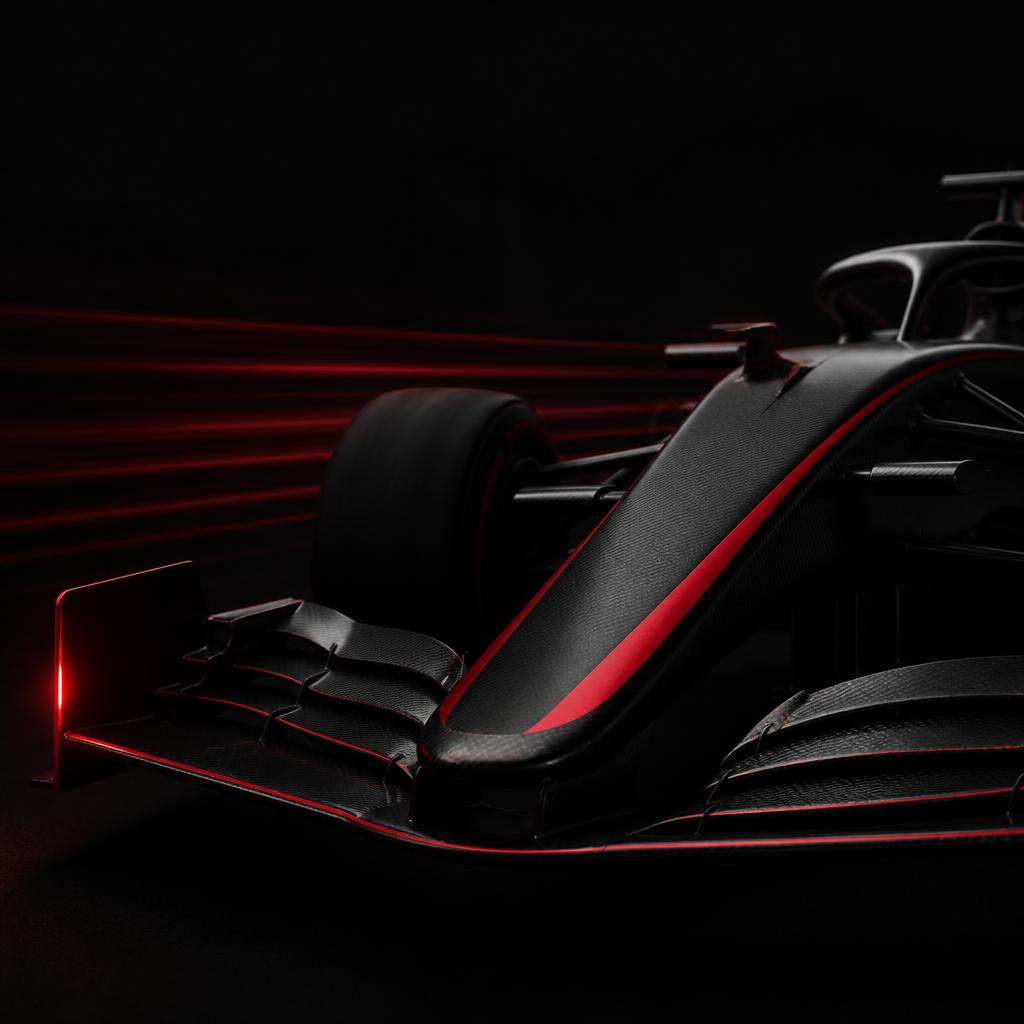
Top F1 Facts & Trivia
20+ surprising Formula 1 facts and trivia across speed, rules, history, and tech — perfect for fans and quiz night ammo.
Speed & Performance
- 01Top speeds above 370 km/h. Modern F1 cars regularly exceed 350 km/h in race trim, with low-downforce setups pushing past 370 km/h on long straights like Monza and Baku.
- 020–100 km/h in roughly 2.6 seconds. Launch is limited by traction, not power — F1 cars accelerate harder above 100 km/h thanks to massive aerodynamic grip.
- 03Braking from 300 to 0 in under 4 seconds. Carbon brake discs and aero load let drivers shed speed at over 5g of deceleration, faster than almost any road-legal vehicle.
- 04Drivers endure 4g to 6g in fast corners. Sustained lateral g-forces are higher than fighter pilots experience for most of a race lap, which is why neck training is essential.
- 05Pit stops finish in under 2 seconds. Red Bull set the record at 1.82 seconds in 2019 — a fully synchronised 22-person operation that changes all four tyres in less time than a sentence.
Rules & Scoring
- 06Race winner earns 25 points. Points run 25-18-15-12-10-8-6-4-2-1 down to 10th, with one bonus point for the fastest lap when finishing inside the top 10.
- 07Sprint races award the top 8. Saturday sprints pay 8-7-6-5-4-3-2-1 — small in isolation, but decisive across a 24-race season.
- 08Races must use at least two tyre compounds. In dry races, every driver must run at least two of the three slick compounds — a rule designed to force strategic pit stops.
- 09Race distance is at least 305 km. Every Grand Prix covers a minimum of 305 km — except Monaco, where the tight street layout caps the distance at 260 km.
- 10Two-hour race time limit. A race is capped at two hours of running, or three hours of total elapsed time if interrupted by red flags.
History & Records
- 11The world championship began in 1950. The first F1 World Championship round was the 1950 British Grand Prix at Silverstone, won by Giuseppe Farina for Alfa Romeo.
- 12Lewis Hamilton and Michael Schumacher share 7 titles. Both drivers hold the record for most World Championships, with Hamilton also holding the record for most race wins.
- 13Modern seasons run around 24 Grands Prix. Recent calendars have grown to a record 24 races, spread across five continents from March to December.
- 14Ferrari is the oldest active team. Scuderia Ferrari has competed in every World Championship season since 1950 and holds the record for most Constructors' titles.
- 15Monza is the "Temple of Speed". Italy's Autodromo Nazionale Monza has the highest average lap speeds on the calendar, with qualifying averages above 250 km/h.
Tech & Safety
- 16The halo became mandatory in 2018. The titanium halo can support the weight of a London double-decker bus and has been credited with saving multiple drivers' lives.
- 17Pirelli is the sole tyre supplier. Pirelli supplies five dry compounds (C1 to C5) plus intermediate and full-wet tyres for every team on the grid.
- 18Sparks come from titanium skid blocks. The bright shower of sparks under modern cars is titanium scraping the asphalt — visible mostly at night under floodlights.
- 19Engines are 1.6L turbo-hybrids. Power units combine a 1.6-litre V6 turbo with electrical recovery from the brakes (MGU-K) and exhaust (MGU-H), producing over 1,000 hp.
- 20A cost cap limits team spending. Since 2021, teams operate under a budget cap (around $135M and dropping) to narrow the gap between front-runners and the rest of the grid.
Learn More About F1
Explore deeper explainers with detailed Formula 1 facts, rules, speed, and strategy.
f1 data archive
Search the F1 Data Archive
Read guidef1 glossary
F1 Glossary: 50+ Terms Defined
Read guidef1 teams 2026
F1 Teams 2026: All 11 Constructors
Read guideanatomy of an f1 car
Anatomy of an F1 Car
Read guidemax verstappen facts
Max Verstappen Facts
Read guidelewis hamilton facts
Lewis Hamilton Facts
Read guidefernando alonso facts
Fernando Alonso Facts
Read guidef1 points system explained
How the F1 Points System Works
Read guidef1 world champions list
Complete List of F1 World Champions
Read guidehow an f1 race weekend works
F1 Race Weekend Format Explained
Read guidef1 safety evolution guide
How F1 Safety Has Evolved
Read guidelegendary f1 circuits history
Most Famous F1 Circuits and Their History
Read guidehow fast do f1 cars go
How Fast Do F1 Cars Go?
Read guidehow does f1 qualifying work
How Does F1 Qualifying Work?
Read guidewhy do f1 cars spark
Why Do F1 Cars Spark?
Read guideAbout FactsF1
FactsF1 is the dedicated hub for Formula 1 facts, statistics, and history. Browse 100+ F1 facts across speed, scoring, tech, and safety, search the available F1 data archive of race results and standings, and read in-depth guides on the drivers, teams, circuits, and moments that shaped the sport.
Frequently Asked Questions
How many F1 races are there per year?
Recent Formula 1 calendars feature around 24 races, though the exact number can change by season due to scheduling and venue updates.
How fast do F1 cars go?
Modern F1 cars usually reach about 340-360 km/h depending on circuit layout, setup, weather, and DRS usage, with peaks above 370 km/h at low-downforce tracks.
How does F1 scoring work?
Grand Prix points are awarded to the top 10 finishers (25 for a win down to 1 for 10th), with an extra point for fastest lap if the driver finishes in the top 10.
What is the most interesting F1 fact?
A favourite among fans: the fastest F1 pit stop on record is 1.82 seconds, set by Red Bull at the 2019 Brazilian Grand Prix — quicker than it takes to read this sentence.
How many laps is an F1 race?
Lap counts vary by circuit because every Grand Prix must cover at least 305 km. Short tracks like Monaco run 78 laps, while longer circuits like Spa run around 44 laps.
Who has won the most F1 World Championships?
Lewis Hamilton and Michael Schumacher are tied with 7 World Championships each. Hamilton also holds the record for most career race wins.
Be the First to Know
Get notified when our app launches and receive exclusive early access to premium F1 content.
We respect your privacy. Unsubscribe at any time.